Sustainable Aviation: The Future of Green Skies

The aviation industry is entering a new era—one where green aviation technology takes center stage. With air travel demand projected to double by 2050, reducing carbon emissions is no longer an option—it’s a necessity. Currently, aviation accounts for about 2.5% of global CO₂ emissions, and the industry is under increasing pressure to achieve net-zero emissions by 2050.
So how can we keep flying without harming the planet? The solution lies in sustainable aviation—a combination of innovative fuels, lightweight materials, and next-gen propulsion systems. Let’s explore the science behind the future of flying.
Why Aviation Needs Sustainable Solutions
Unlike cars that can shift to batteries easily, aircraft require extremely high energy density to power long-haul flights. Jet fuel like Jet A-1, the standard aviation fuel, provides 43 MJ/kg of energy, while lithium-ion batteries only offer 0.9 MJ/kg. This is why going fully electric for large aircraft isn’t feasible yet.
But innovation is on the rise, and the industry is focusing on three big areas:
Sustainable Aviation Fuels (SAF)
Advanced Materials
Next-Generation Propulsion Systems
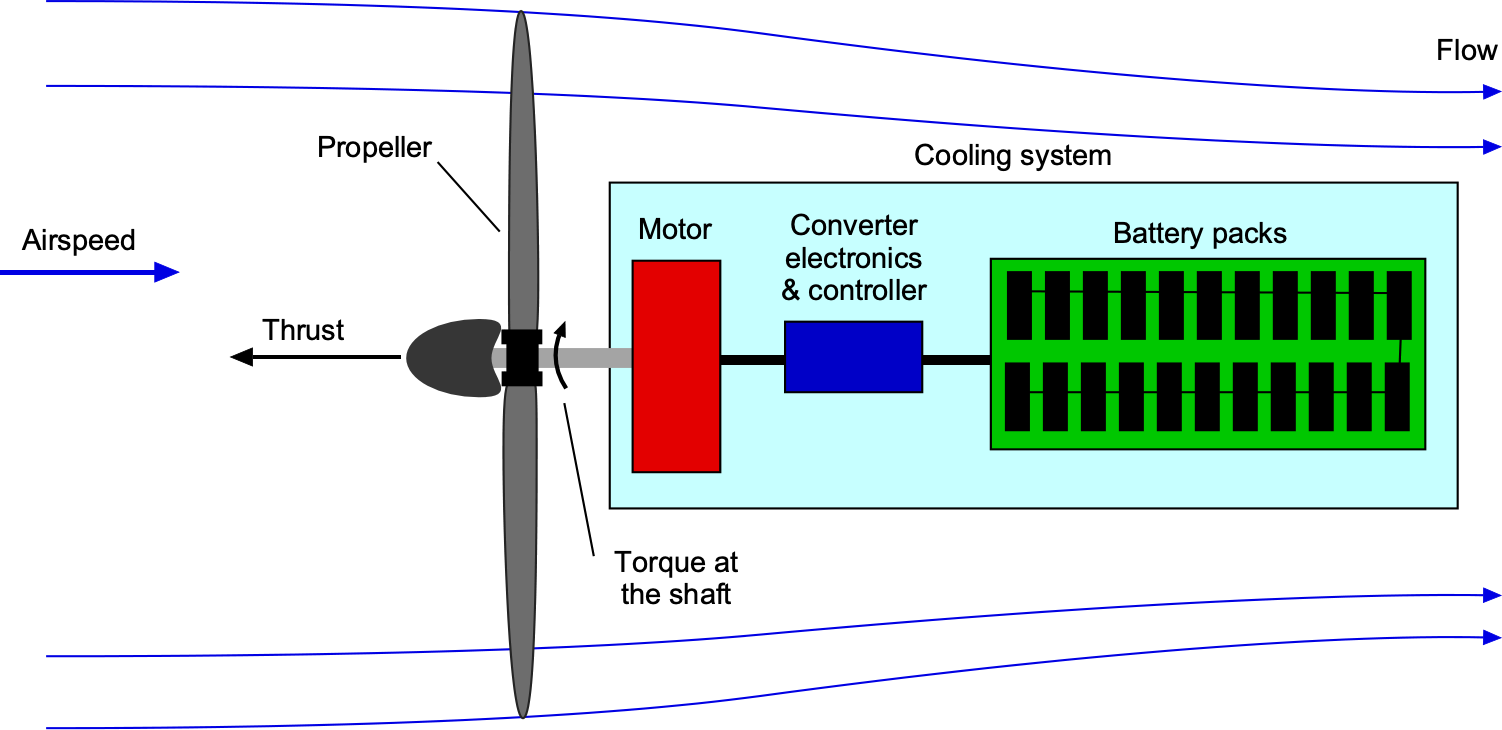
A basic electric propulsion system consists of a set of batteries serving as the energy source, which supplies electrical current to an electric motor that drives a propeller.
Sustainable Aviation Fuels (SAF): The Immediate Solution
What is Jet A-1?
Jet A-1 is the most widely used conventional aviation fuel. It’s a kerosene-based fuel with additives for high-altitude performance, freezing point resistance (-47°C), and thermal stability. However, it’s fossil-derived, which means high CO₂ emissions during production and combustion.
What are SAFs?
Sustainable Aviation Fuels (SAF) are drop-in alternatives to Jet A-1, made from renewable and waste-based sources. These fuels significantly reduce the lifecycle carbon footprint—by up to 80% compared to conventional jet fuel.
Types of SAF:
HEFA (Hydroprocessed Esters and Fatty Acids): Made from used cooking oil and animal fats.
FT-SPK (Fischer–Tropsch Synthetic Paraffinic Kerosene): Derived from municipal waste or biomass.
Alcohol-to-Jet (ATJ): Converts ethanol or isobutanol into jet fuel.
Power-to-Liquid (PtL): Creates synthetic fuels using renewable electricity, CO₂, and water.
Key Advantage: SAF can be used in existing aircraft engines without modification, making it the most practical short-term solution.
Airlines like KLM, Lufthansa, and United Airlines are already using SAF blends on commercial flights. Boeing aims for 100% SAF compatibility across all aircraft by 2030.
Advanced Materials: Lighter, Stronger, Greener
Reducing weight is essential for fuel efficiency. Modern aircraft like the Boeing 787 Dreamliner and Airbus A350 use:
Carbon Fiber Reinforced Polymers (CFRP): Cuts weight by up to 20% compared to aluminum.
Recycled Aluminum and Titanium Alloys: Retain strength while being eco-friendly.
Bio-based Composites: Flax, hemp, and natural fibers are being explored for interior components.
Next-gen innovations include thermoplastic composites, which can be melted and reshaped for recyclability, unlike traditional thermosets.
The Future of Propulsion: Beyond Jet Engines
Electric & Hybrid Propulsion
Electric planes are ideal for regional flights (up to 600 km). Companies like Heart Aerospace and Eviation are pioneering all-electric aircraft, while Rolls-Royce and ZeroAvia are testing hydrogen fuel-cell systems.
Hydrogen Combustion & Fuel Cells
Hydrogen has 3x more energy per kilogram than jet fuel but requires cryogenic storage at -253°C. Airbus is leading the ZEROe concept, aiming for hydrogen-powered commercial aircraft by 2035.
Ion Propulsion Systems
Ion propulsion—commonly used in spacecraft—creates thrust by accelerating ionized particles using electric fields. While it’s extremely fuel-efficient, the thrust is too low for large passenger planes. However, experimental projects, such as MIT’s ionic wind aircraft, are exploring silent, emission-free propulsion for small-scale and unmanned aerial systems.

Airbus reveals hydrogen-powered zero-emission engine
Green Airports and Carbon-Neutral Operations
Sustainability isn’t just about planes. Airports are becoming eco-hubs:
Solar-powered terminals (like Cochin International Airport in India)
Electrified ground support vehicles
Advanced waste management systems
Net-zero commitments (Heathrow and Changi aim for carbon neutrality by 2050)
The Road to Net-Zero Aviation
The journey to sustainable air travel won’t happen overnight, but every step—from biofuels and hydrogen power to ion propulsion and green infrastructure—brings us closer. The International Air Transport Association (IATA) has committed to net-zero aviation by 2050, and innovation is accelerating at an unprecedented pace.
The sky has always been the limit. Now, thanks to science and sustainability, we’re making sure it stays blue—for generations to come.


Comments
Post a Comment